
The Decaf Challenge
Historically, decaffeinated coffee has carried the stigma of losing much of its flavor and aroma during the caffeine extraction process. Many traditional methods rely on harsh chemical solvents that alter the cellular structure of the bean. However, Colombia has perfected a natural method that completely changes this perception, resulting in a sweet, complex, and caffeine-free cup.
Colombia’s innovative method: About the Sugar Cane Process
The Sugar Cane process, also known as the natural Ethyl Acetate (E.A.) process, is an eco-friendly decaffeination method that uses naturally derived compounds. Ethyl Acetate is a substance found naturally in many fruits (such as apples and blackberries). In Colombia, this compound is obtained by fermenting the molasses of the abundant sugar cane grown in the country.
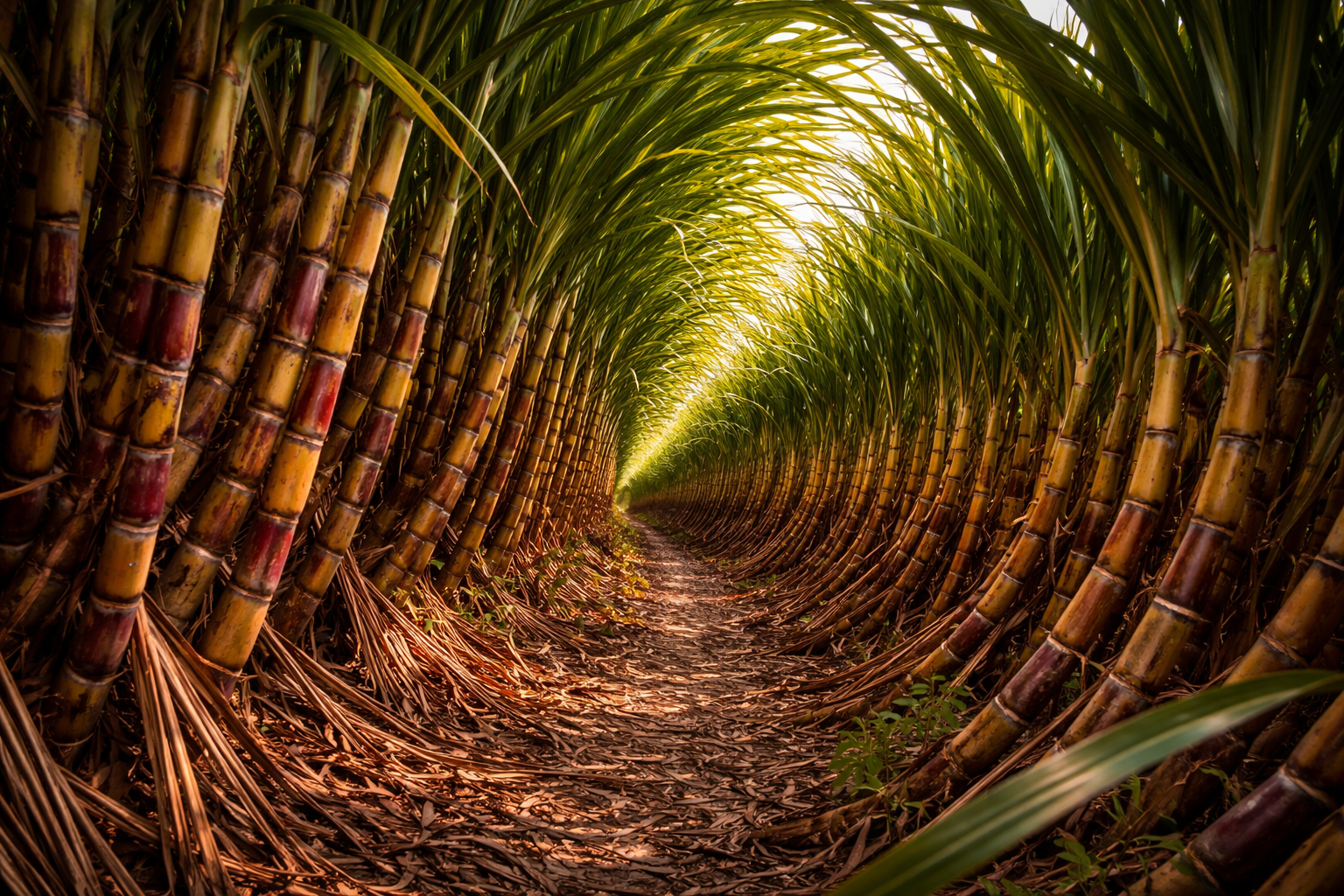
Descafecol: Magic in the Coffee Axis
Descafecol is the only decaffeination plant in Colombia, strategically located in Manizales, right in the heart of the Coffee Axis (Eje Cafetero). Its biggest advantage is that the coffee doesn’t have to travel to Europe or North America to be decaffeinated; the entire process happens at origin. This not only drastically reduces the carbon footprint but also ensures the beans remain at their peak freshness. Descafecol beautifully combines two of Colombia’s most important agricultural products: high-quality Arabica coffee and sugar cane.
The Step-by-Step Process:
- Preparation and Steaming: The green coffee beans are subjected to a low-pressure water and steam bath. This causes the beans to swell and open their pores, facilitating extraction.
- Natural Extraction: The beans are repeatedly washed with a solution of water and naturally derived Ethyl Acetate. The E.A. acts like a magnet, binding specifically to the caffeine molecules and extracting them without washing away the flavor and aroma compounds.
- Cleansing: Once at least 97% of the caffeine has been extracted, the beans are steamed once more to remove any remaining traces of the ethyl acetate.
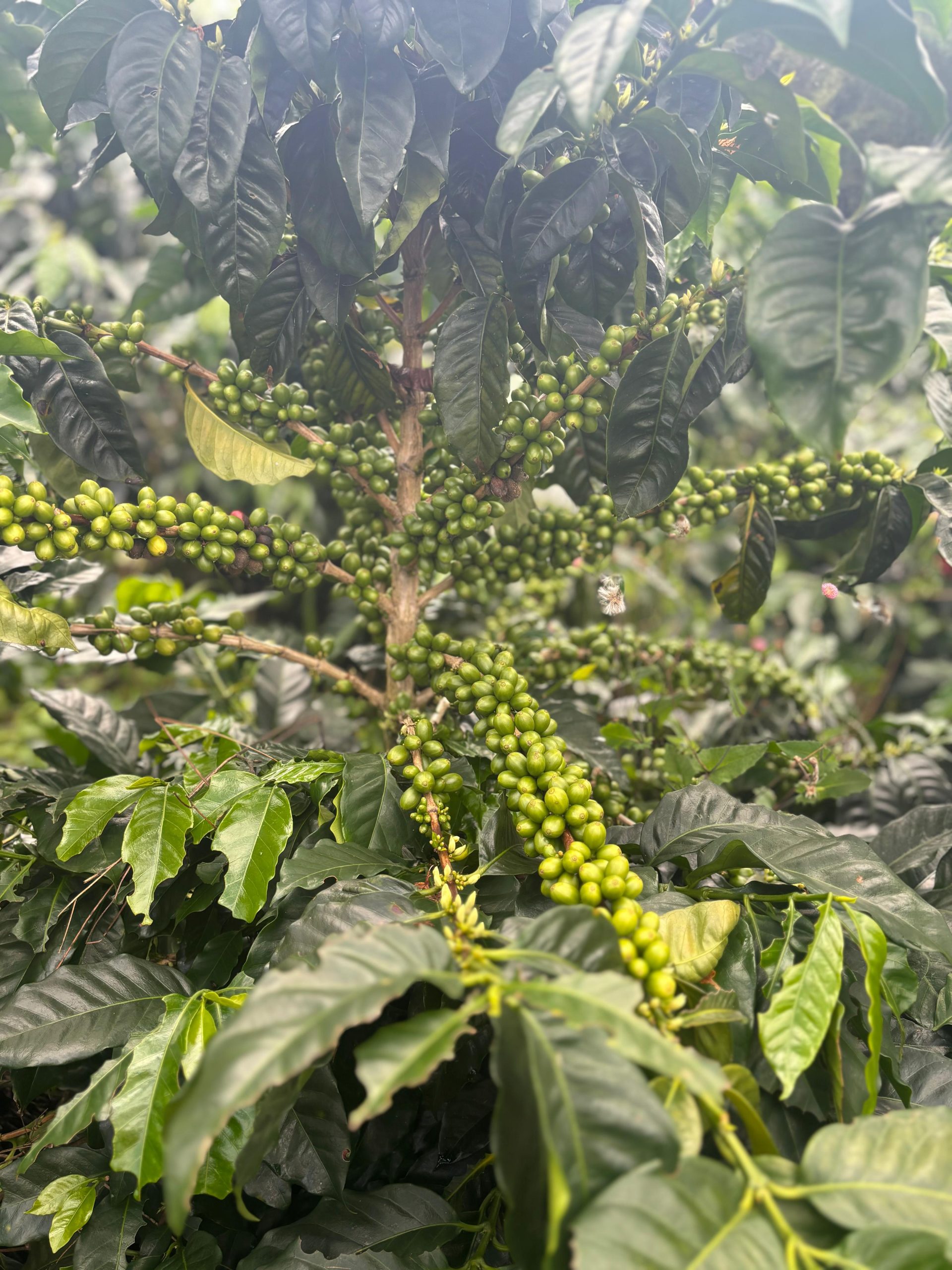
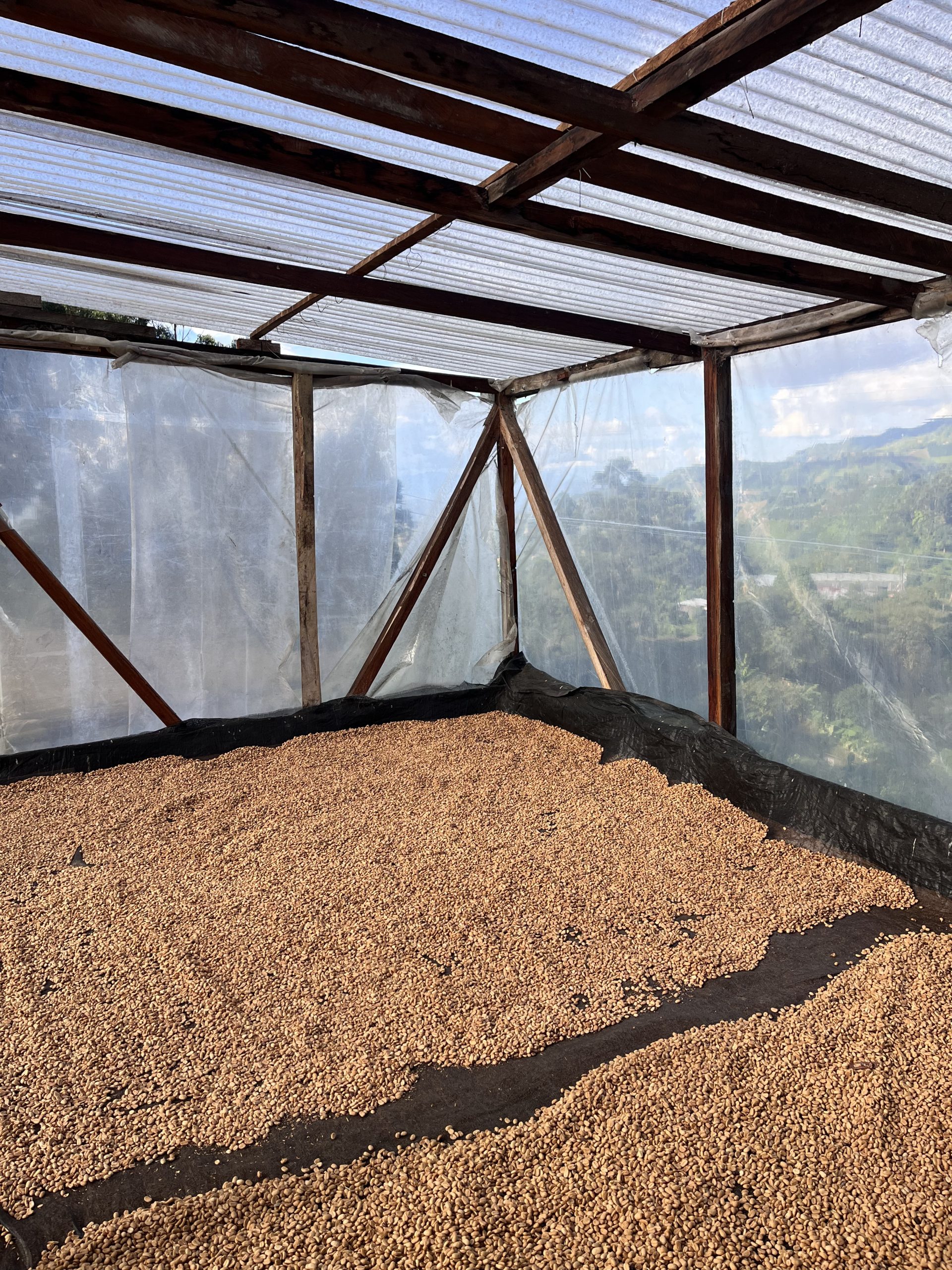
- Drying: Finally, the beans are vacuum-dried until they return to their original moisture content (between 10% and 12%), leaving them ready to be roasted.
Why is this process superior?
The Sugar Cane process by Descafecol is widely preferred in the specialty coffee industry. By avoiding extreme temperatures and harsh synthetic chemicals, the cellular structure of the coffee bean remains completely intact. Furthermore, because ethyl acetate is naturally sweet, this process often enhances the fruity notes, bright acidity, and characteristic sweetness of Colombian coffee, offering a decaffeinated cup that many experts cannot distinguish from a regular caffeinated one.
Our Offer
This is our mainstay decaf offering, sourced from Huila, Colombia through our partners at Finca Nazaret. The focus is on quality, traceability, and coffees that perform just as well as their caffeinated counterparts.
☕ Lot C502 — Decaf Sugar Cane, Huila
Panela, nuts, light body, citric notes, medium acidity